


1-15 Lexington Rd, Underwood, QLD, AU, 4119
SEARCH
Diet for Diabetic Cats: Feeding Tips After a Diabetes Diagnosis
A diabetes diagnosis comes with a lot of information to take in. After the overwhelm of a new routine and reality subsides, you’ll likely remember the need for insulin, but what about food? If you’re wondering if there’s a specific diet for diabetic cats, the answer is yes. It’s a key pillar of your management plan, along with medication and regular monitoring.
At Cat Specialist Services, we provide high-quality healthcare, exclusively for cats, in an environment that helps them feel as safe and comfortable as possible. We’ve met many patients with feline diabetes and understand how much there is to learn in the early days. Here’s what and how to feed, and what you should ask your vet.
Choosing the right nutritional profile
Cats are what we call obligate carnivores, and they don’t tolerate carbohydrates well. Unlike humans or dogs, they struggle to regulate blood sugar after high-starch meals. That’s why a low-carb diet is necessary for stabilising glucose levels. Their meals should focus on protein, which helps maintain muscle mass, metabolic balance and a healthy weight.
Once your cat is on the right diet, the effects can reach well beyond mealtime. Some cats respond to dietary changes so well that they require lower insulin doses, and remission is even possible under close veterinary supervision. By reducing glucose fluctuations through diet, we can also protect them from serious complications like diabetic ketoacidosis.
However, eating low carb doesn’t mean incomplete. Your cat’s diet should still be balanced for their age and provide appropriate levels of fat, fibre, and essential vitamins and minerals. If they have additional conditions, such as kidney disease or pancreatitis, their diet may need even further modification. Prescription diets formulated for diabetic cats are a reliable option. They’re designed to support blood glucose control while meeting all nutritional needs. Your vet can help you decide if one is right for your cat.
Format, timing and portion control
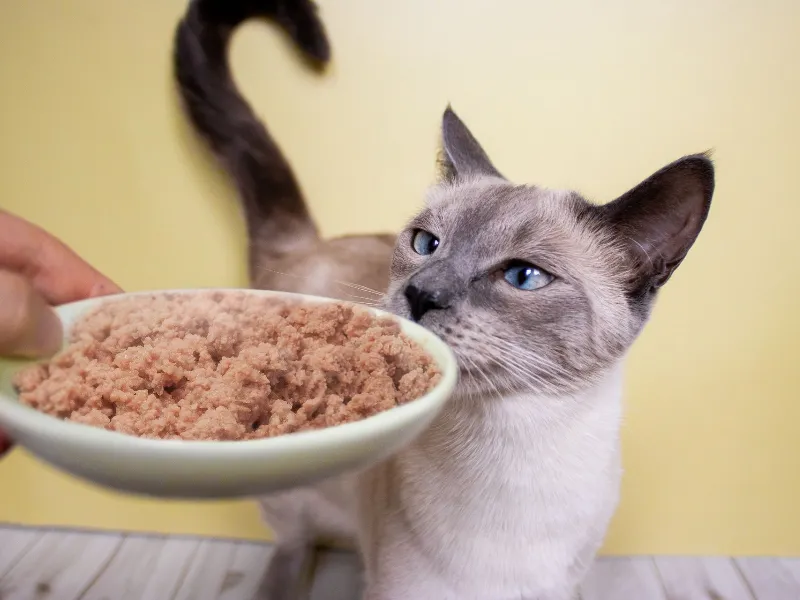
Wet food generally supports better blood sugar control and hydration, thanks to its lower carbohydrate content and higher moisture. The softer texture can be easier to digest, and the extra water helps with satiety, which means your cat is more likely to feel full and less inclined to overeat. You could also try adding grated zucchini to your cat’s wet food. This can also help them feel full.
When is the best time to feed your cat? The “optimal” meal timing for diabetic cats is not really known, but twice‑daily meals at the same time as insulin injections and grazing or “free feeding” can work. Sometimes it is practical to start with two measured meals 12‑hourly, timed around insulin injections, because it makes it easier for owners to monitor their cat’s appetite and ensure the safety of insulin dosing. Grazing can also be fine, particularly if your cat is on a low‑carbohydrate diet and longer‑acting insulin (e.g. glargine), as their blood glucose control tends to be smoother.
Weight management is crucial in diabetes care. This isn’t just about preventing obesity, but also about avoiding rapid weight loss, which can lead to complications of its own. Maintaining muscle mass, especially in older cats, is so important for their long-term health. Total daily calorie intake should be based on body condition and adjusted regularly as weight or activity levels change. If you’re unsure about targets, speak with your regular vet for a personalised plan.
Practical tips for everyday feeding
Feeding a diabetic cat can feel like a balancing act, but a few consistent habits can make life much easier. The key is building a routine that supports their health and helps you stay on top of their needs:
- Check the label
Look for products with low carbohydrate content and high moisture. Reading the guaranteed analysis can be helpful, but your veterinarian or veterinary nurse can also point you toward options that meet your cat’s specific needs.
- Ask about prescription options
Not every cat needs a prescription diet, but many benefit from one. These diets are formulated to support blood sugar control while meeting all nutritional requirements. - Stick to a feeding routine
Cats do best with consistency, either twice daily feeding or and free-feeding if they are used to it and receive a “low carb” diet. - Be careful with treats
Many commercial treats are high in carbs. Ask your vet about safe options, or use small portions of their regular food if you need to give rewards. - Adjust when things change
If your cat skips a meal, eats less than usual, or shows less interest in food, don’t guess with their insulin dosing. It’s safest to check in with your vet. - Monitor hydration and urination
Always provide clean, fresh water. If your cat suddenly drinks more or urinates more than usual, it could be a sign that their blood glucose levels are not under control.
Working with your vet for best possible outcomes
Diabetes is a complex condition, and the dietary approach is never a one-size-fits-all. And your cat’s needs may change over time. That’s why regular checkups are essential. Even subtle shifts in weight, appetite or behaviour can signal a need for adjustments to their feeding plan.
From tweaking portion sizes to trialling different formulas or reassessing optimal feeding times, your veterinary team will know what to do and how to guide you and your cat. In complex cases, they can also seek specialist advice or consult a feline nutritionist for more tailored diet decisions.
Managing diabetes is a team effort
Food may not have been your first thought upon hearing your cat’s diagnosis, but it’s definitely going to be important moving forward. With a little education, time, practice, paying attention and asking questions, you’ll get into a familiar routine that works for both of you.
Start by reviewing your cat’s current food and feeding schedule, and make changes where needed. Work closely with your regular vet to ensure their diet remains appropriate as their condition evolves.
If you’re looking for specialist support, speak with your vet about a referral to Cat Specialist Services. Our team is experienced in managing complex feline conditions, including diabetes.
Vets can refer patients here.
“Diet, medication and monitoring work together in diabetes management.”
Are you worried about your cat’s health?
If you are concerned about your cat, please reach out to our friendly team. Call us on 1300 228 377 or fill out the contact form below. In an emergency, please contact your local vet.
For vets – to refer a patient or book a telehealth consultation, please call us on 1300 228 377, book through the portal or fill in the form.
Meet The Author
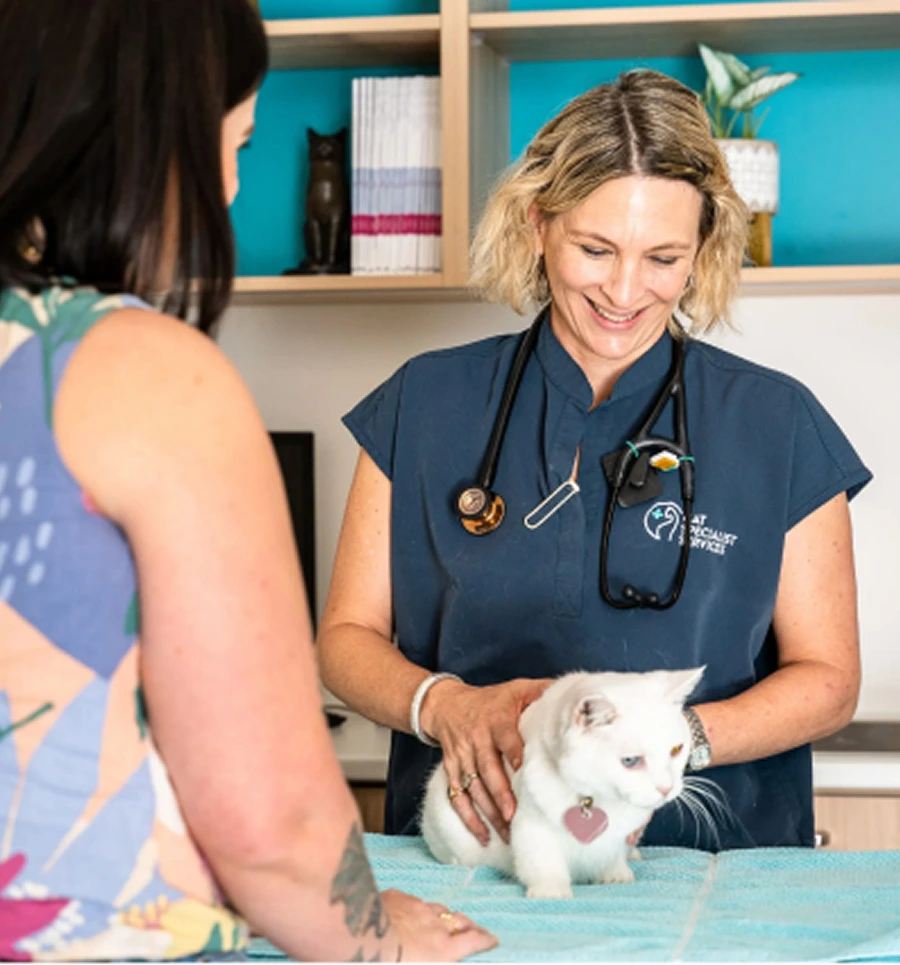
Dr Rachel Korman
Specialist in Feline Internal Medicine
BVSc MANZCVS (Internal Medicine) FANZCVS (Feline Medicine)
Dr. Korman’s childhood love for cats led her to veterinary medicine, and early on, it was clear that feline care was her calling. After graduating from the University of Queensland in 2000, she worked in small animal and feline-only practices across Australia and the UK.
She received a Senior Clinical Training Scholarship from the Feline Advisory Bureau (now International Cat Care) at the University of Bristol, where she researched feline infectious and haematological diseases, and in 2018, became a Fellow of the Feline Medicine Chapter of the Australian New Zealand College of Veterinary Scientists and a registered Feline Medicine specialist.
Frequently Asked Questions
What should a diabetic cat eat after diagnosis?
We often recommend a diet that is high in protein and low in carbohydrates. This reflects the natural nutritional needs of cats and can help stabilise blood glucose levels.
Why are low-carbohydrate diets recommended for diabetic cats?
Cats do not process carbohydrates as efficiently as other species. Reducing starch intake helps minimise large fluctuations in blood sugar levels.
Is wet food better for diabetic cats?
Wet food often contains fewer carbohydrates and more moisture. This combination may support glucose control and hydration.
How often should diabetic cats be fed?
Feeding schedules may vary, but many diabetic cats receive meals at the same time as insulin injections. Consistency helps maintain stable glucose levels.
Can diet changes affect insulin requirements?
Yes. Some cats respond well to dietary changes and may need adjustments to their insulin dose under veterinary guidance.
Patient Stories
Our commitment to feline health is best seen in the stories of the cats we’ve had the privilege of treating. These journeys highlight the dedication, expertise and compassion that drive us.
Each patient faced unique challenges, and it was our honour to offer high-quality care and help them regain strength and happiness. We value the deep bonds with cats and their owners, knowing the difference we make in their lives.
Marley, and a very rare encounter with Listeria
Marley overcame a rare Listeria infection, hepatic lipidosis and diabetic ketoacidosis with intensive treatment and careful ongoing management.
Kitty, a lymphoma survivor
We first met Kitty after she was referred to CSS for the evaluation of a large intestinal mass
Poppi finds her feet again
Following surgery to remove a hairball obstruction, Poppi was referred to us at CSS as she had not bounced back as expected
Rusty and his ongoing chronic rhinitis journey
Lifelong nasal issues, including persistent discharge and breathing noise, have been a bit of a thorn in Rusty’s side.
Lando’s long game with cryptococcus
Lando was referred to CSS because he had a swelling under his jaw that wouldn’t go away.
Key Takeaways

Diet is a key part of managing feline diabetes alongside medication and glucose monitoring.
Cats are obligate carnivores and generally tolerate low-carbohydrate diets better.
High-protein diets help maintain muscle mass and metabolic balance.
Cat Specialist Services Reviews  on
on 
Tanya Bell
6 months ago

We transported our cat here from another animal hospital, as his condition was too complex for them. Our pet was given the highest quality of care, multiple investigations/procedures being able to be done at the one place a godsend. We were kept up to date frequently throughout his stay. All questions & options explained thoroughly. Being able to have private visits certainly helped us and our cat too. I would highly recommend Cat Specialist Services at Underwood. Amazing staff from reception, vet nurses, vets & specialists. Oh, and yes he is recovering wonderfully at home.
Melinda Cox
A month ago
So very happy we were asked to come here for advice for our NORBIT. He has had 2 x UTI blockages within weeks of each other since turning 6. Surgery seemed to be his only option and he didn’t feel it was very fair on him if we didn’t at least exhaust all other avenues first.
Dr Allison was very thorough in her tests and has let us know she would like to treat the cause of the problem. Great news.
It may lead to removal of crystals in his bladder if his diet doesn’t let him pass them naturally.
At least this surgery won’t be as severe at taking his penis off him – so as his fur parents – we are very happy with this.
We await further tests to see what’s in store for him.
NORBIT will now be a patient of the clinic as we are so far very happy with his treatment thus far.
Lesley Rosekrans
A month ago
Hi has only been a week since losing my beautiful Peaches but can’t thank Dr Cindy, Maree and Jackie enough for the tender care they gave her and they after care they gave me. I sincerely thank them and can’t recommend the Clinic highly enough they are such caring people. Peaches I’m happier times.
Madison McEwan
A month ago
I cannot thank the entire CSS team enough and especially Dr Cindy for the care they provided for our boy with a urinary blockage, and we will be taking both our cats here from now on. The clinic is exceptionally clean and calming compared to all other clinics we’ve been too, and all staff from the reception to the nurses/vets were so supportive during a stressful time. I knew from the first minute that I got to see him after he was transferred that he was in the best place, and that the staff genuinely care about their well-being and positive long term outcomes. We were given regular updates and full transparency, so much information including QR video codes on how to administer medications, along with print outs and emails about how to best help avoid future issues or recurrence. Our boy got to smooch on everyone and was beyond well looked after. Thank you again, you all made an incredibly stressful situation actually manageable and calming.
Astrid El Gamal
6 months ago
Dr Wan-Ju has been treating my baby since her first seizure in November 2025 and she has been fantastic.
Everybody at the clinic is so friendly and caring and I know my baby is in good hands.
Thank you team!
Deeba M
3 months ago
Dr Alison Jukes from CSS Underwood is an AMAZING feline physician. She is kind, professional, thorough and our cat is blessed to have her on his side. She even was able to save us money and invasiveness by being skilled to the level of doing ultrasound on two separate occasions without our cat needing to go under full sedation. Our other cat was recently seen by Dr Jukes as well, and she made sure our cat’s heart was ok. I also want to thank the lovely Jacqueline and Mairead from customer care. They are very kind each time I see them and call up. Sending thanks from our family, including Smokey and Floozy!
Judith Dionysius
A month ago
My whole experience with CSS was positive – from the first email I received giving lots of information regarding the process of radioactive iodine treatment to the expected costs, to checking my cat in for the treatment, boarding for 2 weeks after the treatment and picking her up to come home. They didn’t push for any tests that were not necessary.
Janelle Wieden
5 months ago
We never knew this service existed but we are very grateful we were referred to them. Our vet Cindy was really great, she made us feel at ease during a very stressful time. We got the sense straight away the Leo was in good hands. This service made us feel better knowing that they specialise is cats only. Would highly recommend their services
Georgia Carter
5 months ago
My Lani finished her I-131 treatment today and I am beyond impressed with the way she was looked after. I am by definition a neurotic pet owner and sending my fur child away for a week was seriously daunting.
I was given daily updates about how kitty was eating, toileting and behaving. This really put my mind at ease. Vets and vet nurses were so accomodating and allowed Lani to have her favourite foods from home prepared her favourite way.
Her vet was so thorough when explaining her treatment and condition to me.
The ladies at reception were so friendly and understanding.
I honestly cannot recommend this clinic enough and I am so thankful for the positive experience Lani and I have had.
Lauren Woodward
A year ago
My sweet ginger boy Louis was hospitalised at CSS for a Urinary Obstruction. Dr Cindy and all the reception staff were amazing and empathetic. I would often ring up with questions post procedure and Dr Cindy would make time to talk and explain things to me
Service Locations
Cat Specialists accepts referrals for cats across Brisbane and surrounding regions, working closely with local veterinary clinics to provide specialist diagnosis, treatment, and ongoing management.



Contacting Us
Pet Owners
If you would like to talk about treatment for your cat, call us on 1300 228 377 or fill in the form.
In an emergency, please contact your local vet.
Vets and Nurses
To refer a patient or book a telehealth consultation please call us on 1300 228 377, book through the portal or fill in the form. For advice calls, please see the guidelines here.


 Monday-Friday: 8 am-6 pm
Saturday/Sunday - Closed