


1-15 Lexington Rd, Underwood, QLD, AU, 4119
SEARCH
What you need to know about hot weather and feline hydration

When the temperature rises, cats can feel the effects faster than most people realise. Summer has officially arrived, and if you’re taking a few extra breathers and finding the humidity a little annoying, spare a minute to think of your feline companions. Cats have limited cooling mechanisms and are behaviourally inclined to hide discomfort from you, so they’re likely feeling it even if you don’t see it. Hydration is something to be hyper-aware of in these hot weather moments.
At Cat Specialist Services, our work is exclusively focused on feline health, and we frequently observe the impact of environmental factors on cats. Summer heat brings predictable challenges for some cats, particularly those with underlying conditions. Here is what you need to know about the risks, signs of trouble, tips for hydration support and when you should seek veterinary advice.
How heat affects cats differently
As mentioned, cats have limited cooling mechanisms. They do not sweat in a meaningful way as humans do. Their only sweat glands are on their paws, and those glands do very little to regulate body temperature. So how do they cool down? Through evaporative loss when grooming and through mild increases in their respiratory rate. Those processes are slow and easily overwhelmed during excessive heat, especially when the conditions are humid.
Even indoor cats are at risk during the summer. Many homes trap heat, especially apartments or houses without cross-ventilation. These cats cannot always choose a more comfortable zone as they would when outside, and sometimes lack access to good airflow or cooler surfaces. Indoor heat typically peaks later in the day and can remain high well into the evening. As many cats prefer to sleep in enclosed spaces like linen cupboards, wardrobes and under beds, it’s not uncommon for them to inadvertently put themselves in hotter environments.
Cats naturally conserve water, which means they produce highly concentrated urine and have a low baseline thirst compared to dogs. This is an evolutionary trait that helps them survive in dry regions, but reduces their safety margin in hot weather because they’re slower to increase water intake. Cats also exhibit resting behaviour that works against them in the heat. They stay quiet rather than move locations, which prolongs heat exposure.
There are some risk factors that increase susceptibility, including:
- Age – kittens and senior cats are less able to regulate body temperature, and they tire quickly in hot conditions.
- Illness – cats with heart or kidney disease, respiratory problems or hyperthyroidism are less able to cope with heat.
- Medications – certain drugs can affect hydration status or alter how the body responds to heat.
- Brachycephalic breeds – Persians and other flat-faced cats have narrowed upper airways, and this reduces their ability to move air efficiently to cool themselves.
- Obesity – excess body fat decreases heat dissipation and increases the workload on the respiratory system.
Recognising early dehydration and heat stress in cats
Because cats tend to mask early discomfort, the first indications of dehydration or heat stress are usually found in small changes to behaviour. You might notice a sudden move to tiled floors or cooler surfaces, or they may become quieter than usual. Resting for longer periods and reduced activity may also be a sign. Some cats will hide in darker, enclosed areas.
Physical clues include gums that feel tacky rather than smooth and moist. Eyes may look a little sunken, and the skin over the shoulders might take slightly longer to return to place when gently lifted, although this can be subtle. As heat stress develops, breathing can become faster or louder, even when the cat is resting. Some cats become unsettled and shift position repeatedly in an effort to get comfortable. Mild agitation or an inability to settle can appear before any obvious signs of distress.
While many cat owners pass off symptoms of heat stress as normal due to the local climate, there are some signals that suggest your cat needs immediate medical attention. Any pattern that escalates rather than subsides over a short period warrants a check-in, as do changes that appear alongside vomiting, weakness or a sudden decline in responsiveness. Persistent or uncharacteristic breathing changes require monitoring, and if your cat has an existing medical condition and is showing even subtle signs of dehydration, you should seek prompt veterinary advice.
Practical ways to keep felines hydrated in the summer
Keeping a cat well hydrated in hot weather, as Brisbane often experiences, typically comes down to offering water in ways that suit their preferences and adjusting the environment so they are more inclined to drink. Small changes can make a big difference to how much fluid they consume over the day. Some simple ideas:
- Offer multiple water sources – different bowl shapes, location and using a fountain with running water can encourage interest for some cats.
- Use wet food to add moisture – a wet food diet can be an easy way to significantly contribute to daily fluid intake.
- Provide safe ice cubes or broth cubes – plain water or cubes made from cat-safe broth create gentle hydration enrichment and prompt extra licking and drinking.
- Create cooler zones in the home – shaded areas, improved airflow and access to nice, cool surfaces will help cats rest and prevent fluid loss from indoor heat exposure.
- Avoid forcing water – never attempt to syringe water into a distressed or resistant cat’s mouth as this can cause aspiration, which will worsen the situation.

When a cat needs veterinary attention
While mild discomfort from heat can often be managed at home, some situations do require veterinary care. If a cat continues to show signs of dehydration despite your best efforts, or if there is vomiting, collapse or a sudden drop in alertness, they should be assessed.
Any cat that struggles to recover after the extreme heat passes or shows changes that seem out of character may need further investigation. In these situations, tests or fluid support can help stabilise them and clarify whether there is an underlying problem.
Seeing hot weather from a cat’s point of view
Warm weather places extra demands on cats, and they meet those demands with fewer tools than humans and other animals have. Supporting hydration during hot weather gives them a margin of comfort they might otherwise struggle to maintain.
If you’re unsure how your cat is handling the heat, keep an eye on their behaviour and any physical changes that stand out. Your vet can help guide you if anything seems unusual.
If your cat requires further assessment or specialist care, your vet can arrange a referral to Cat Specialist Services.
Vets can refer patients here.
Are you worried about your cat’s health?
If you are concerned about your cat, please reach out to our friendly team. Call us on 1300 228 377 or fill out the contact form below. In an emergency, please contact your local vet.
For vets – to refer a patient or book a telehealth consultation, please call us on 1300 228 377, book through the portal or fill in the form.
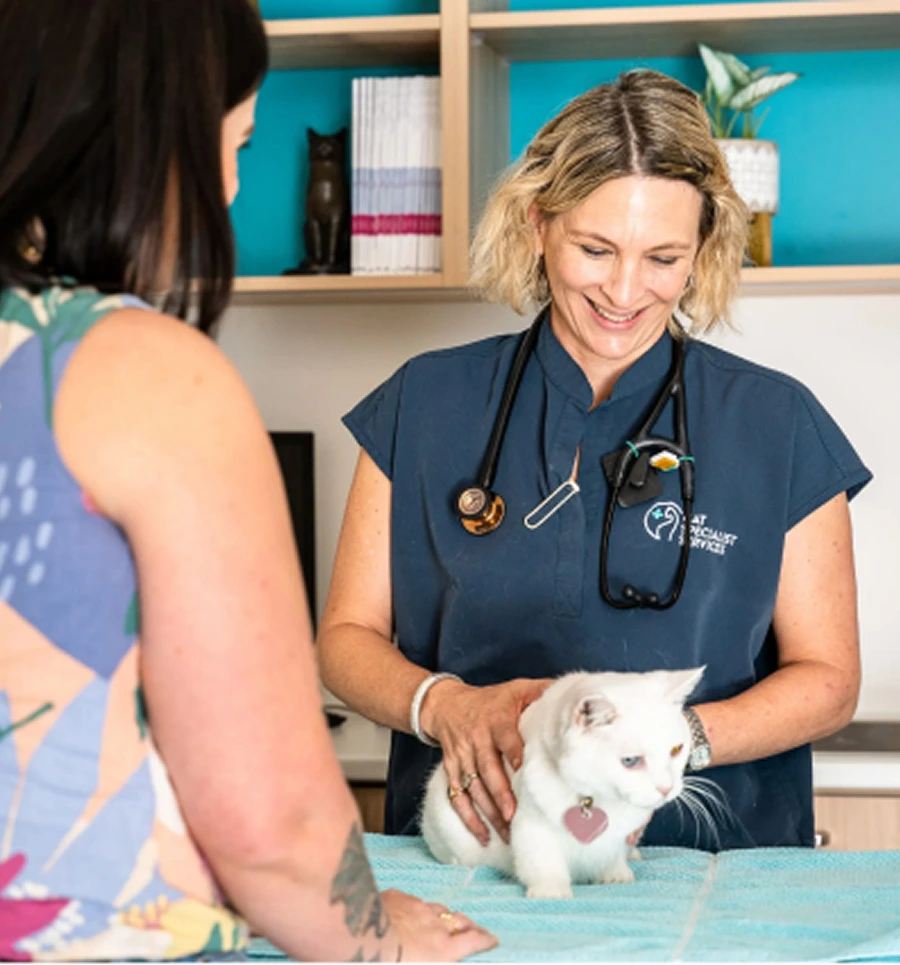
Meet The Author
Dr Rachel Korman
Specialist in Feline Internal Medicine
BVSc MANZCVS (Internal Medicine) FANZCVS (Feline Medicine)
Dr. Korman’s childhood love for cats led her to veterinary medicine, and early on, it was clear that feline care was her calling. After graduating from the University of Queensland in 2000, she worked in small animal and feline-only practices across Australia and the UK.
She received a Senior Clinical Training Scholarship from the Feline Advisory Bureau (now International Cat Care) at the University of Bristol, where she researched feline infectious and haematological diseases, and in 2018, became a Fellow of the Feline Medicine Chapter of the Australian New Zealand College of Veterinary Scientists and a registered Feline Medicine specialist.
Frequently Asked Questions
Why is hydration especially important for cats in hot weather?
Cats have limited natural cooling mechanisms, meaning they cannot regulate heat as effectively as humans. During hot weather, staying hydrated is essential to help regulate body temperature and prevent dehydration or heat-related illness.
Why might it be hard to tell if a cat is struggling in the heat?
Cats often hide signs of discomfort or illness, which means they may appear normal even when heat is affecting them. This makes it important for owners to closely observe behavioural or physical changes during hot weather.
What signs might indicate a cat is dehydrated or overheating?
Possible warning signs include lethargy, changes in behaviour, reduced appetite, or unusual physical symptoms. Monitoring these changes can help owners recognise when a cat may need veterinary attention.
How can cat owners help prevent dehydration during hot weather?
Owners should ensure cats always have access to fresh water, cool resting areas, and a comfortable indoor environment during warmer months to support healthy hydration levels.
When should a cat owner seek veterinary advice?
If a cat shows unusual behaviour, physical changes, or signs of distress during hot weather, owners should contact their veterinarian. A vet can assess the situation and recommend appropriate care or specialist referral if required.
Patient Stories
Our commitment to feline health is best seen in the stories of the cats we’ve had the privilege of treating. These journeys highlight the dedication, expertise and compassion that drive us.
Each patient faced unique challenges, and it was our honour to offer high-quality care and help them regain strength and happiness. We value the deep bonds with cats and their owners, knowing the difference we make in their lives.
Marley, and a very rare encounter with Listeria
Marley overcame a rare Listeria infection, hepatic lipidosis and diabetic ketoacidosis with intensive treatment and careful ongoing management.
Kitty, a lymphoma survivor
We first met Kitty after she was referred to CSS for the evaluation of a large intestinal mass
Poppi finds her feet again
Following surgery to remove a hairball obstruction, Poppi was referred to us at CSS as she had not bounced back as expected
Rusty and his ongoing chronic rhinitis journey
Lifelong nasal issues, including persistent discharge and breathing noise, have been a bit of a thorn in Rusty’s side.
Lando’s long game with cryptococcus
Lando was referred to CSS because he had a swelling under his jaw that wouldn’t go away.
Key Takeaways

Because cats have limited ways to cool themselves and tend to hide illness, hot weather can affect them more than owners realise.
Ensuring access to fresh water and monitoring hydration helps prevent heat-related health issues.
Watching for behavioural or physical changes allows owners to act quickly and seek veterinary advice if necessary.
Cat Specialist Services Reviews  on
on 
Tanya Bell
6 months ago

We transported our cat here from another animal hospital, as his condition was too complex for them. Our pet was given the highest quality of care, multiple investigations/procedures being able to be done at the one place a godsend. We were kept up to date frequently throughout his stay. All questions & options explained thoroughly. Being able to have private visits certainly helped us and our cat too. I would highly recommend Cat Specialist Services at Underwood. Amazing staff from reception, vet nurses, vets & specialists. Oh, and yes he is recovering wonderfully at home.
Melinda Cox
A month ago
So very happy we were asked to come here for advice for our NORBIT. He has had 2 x UTI blockages within weeks of each other since turning 6. Surgery seemed to be his only option and he didn’t feel it was very fair on him if we didn’t at least exhaust all other avenues first.
Dr Allison was very thorough in her tests and has let us know she would like to treat the cause of the problem. Great news.
It may lead to removal of crystals in his bladder if his diet doesn’t let him pass them naturally.
At least this surgery won’t be as severe at taking his penis off him – so as his fur parents – we are very happy with this.
We await further tests to see what’s in store for him.
NORBIT will now be a patient of the clinic as we are so far very happy with his treatment thus far.
Lesley Rosekrans
A month ago
Hi has only been a week since losing my beautiful Peaches but can’t thank Dr Cindy, Maree and Jackie enough for the tender care they gave her and they after care they gave me. I sincerely thank them and can’t recommend the Clinic highly enough they are such caring people. Peaches I’m happier times.
Madison McEwan
A month ago
I cannot thank the entire CSS team enough and especially Dr Cindy for the care they provided for our boy with a urinary blockage, and we will be taking both our cats here from now on. The clinic is exceptionally clean and calming compared to all other clinics we’ve been too, and all staff from the reception to the nurses/vets were so supportive during a stressful time. I knew from the first minute that I got to see him after he was transferred that he was in the best place, and that the staff genuinely care about their well-being and positive long term outcomes. We were given regular updates and full transparency, so much information including QR video codes on how to administer medications, along with print outs and emails about how to best help avoid future issues or recurrence. Our boy got to smooch on everyone and was beyond well looked after. Thank you again, you all made an incredibly stressful situation actually manageable and calming.
Astrid El Gamal
6 months ago
Dr Wan-Ju has been treating my baby since her first seizure in November 2025 and she has been fantastic.
Everybody at the clinic is so friendly and caring and I know my baby is in good hands.
Thank you team!
Deeba M
3 months ago
Dr Alison Jukes from CSS Underwood is an AMAZING feline physician. She is kind, professional, thorough and our cat is blessed to have her on his side. She even was able to save us money and invasiveness by being skilled to the level of doing ultrasound on two separate occasions without our cat needing to go under full sedation. Our other cat was recently seen by Dr Jukes as well, and she made sure our cat’s heart was ok. I also want to thank the lovely Jacqueline and Mairead from customer care. They are very kind each time I see them and call up. Sending thanks from our family, including Smokey and Floozy!
Judith Dionysius
A month ago
My whole experience with CSS was positive – from the first email I received giving lots of information regarding the process of radioactive iodine treatment to the expected costs, to checking my cat in for the treatment, boarding for 2 weeks after the treatment and picking her up to come home. They didn’t push for any tests that were not necessary.
Janelle Wieden
5 months ago
We never knew this service existed but we are very grateful we were referred to them. Our vet Cindy was really great, she made us feel at ease during a very stressful time. We got the sense straight away the Leo was in good hands. This service made us feel better knowing that they specialise is cats only. Would highly recommend their services
Georgia Carter
5 months ago
My Lani finished her I-131 treatment today and I am beyond impressed with the way she was looked after. I am by definition a neurotic pet owner and sending my fur child away for a week was seriously daunting.
I was given daily updates about how kitty was eating, toileting and behaving. This really put my mind at ease. Vets and vet nurses were so accomodating and allowed Lani to have her favourite foods from home prepared her favourite way.
Her vet was so thorough when explaining her treatment and condition to me.
The ladies at reception were so friendly and understanding.
I honestly cannot recommend this clinic enough and I am so thankful for the positive experience Lani and I have had.
Lauren Woodward
A year ago
My sweet ginger boy Louis was hospitalised at CSS for a Urinary Obstruction. Dr Cindy and all the reception staff were amazing and empathetic. I would often ring up with questions post procedure and Dr Cindy would make time to talk and explain things to me
Service Locations
Cat Specialists accepts referrals for cats across Brisbane and surrounding regions, working closely with local veterinary clinics to provide specialist diagnosis, treatment, and ongoing management.



Contacting Us
Pet Owners
If you would like to talk about treatment for your cat, call us on 1300 228 377 or fill in the form.
In an emergency, please contact your local vet.
Vets and Nurses
To refer a patient or book a telehealth consultation please call us on 1300 228 377, book through the portal or fill in the form. For advice calls, please see the guidelines here.


 Monday-Friday: 8 am-6 pm
Saturday/Sunday - Closed