


1-15 Lexington Rd, Underwood, QLD, AU, 4119
SEARCH
Overview of Diabetes Mellitus in Cats

Diabetes - an overview
Diabetes mellitus is a condition where your cat’s body is unable to properly regulate blood sugar (glucose) levels due to a problem with the hormone insulin.
Insulin, produced by the pancreas, helps cells absorb glucose from the blood to use for energy. When your cat has diabetes, their body either doesn’t produce enough insulin or their cells become resistant to it, leading to high levels of glucose in the bloodstream.
Diabetes in cats is most similar to Type 2 diabetes in humans, where the pancreas can still make insulin, but the cells in the body have a reduced ability to use it effectively.
Spotting diabetes in your cat: Signs and symptoms:
Recognising the early signs of diabetes in your cat can make a big difference in treatment. While the symptoms can vary from mild to severe, here are some common signs to watch for:
Increased thirst (polydipsia): Your cat may drink more water than usual.
Increased urination (polyuria): Your cat will urinate more frequently as a result of the increased thirst.
Weight loss: Despite having a good appetite, your cat may start losing weight.
Increased appetite (polyphagia): Some diabetic cats may seem hungrier than usual because their bodies are not using food properly for energy.
Other signs can include poor coat condition, weakness in the back legs (diabetic neuropathy), and a pot-bellied appearance from liver enlargement. Cats with unmanaged diabetes are also prone to developing secondary issues, like urinary tract infections.
If diabetes is left untreated, some cats may become very unwell and develop a condition called diabetic ketoacidosis, which is a medical emergency requiring immediate vet care.

Diagnosing diabetes
If your vet suspects diabetes based on your cat’s symptoms, they will run blood and urine tests to confirm the diagnosis.
Diabetic cats typically have high glucose levels in both their blood and urine.
Since some cats can have temporarily high blood sugar due to stress, your vet might also perform a fructosamine test, which measures the average blood glucose over the past few weeks, providing a more accurate picture.
Treatment options for diabetic cats
Once your cat is diagnosed with diabetes, managing the condition effectively involves several steps. While the treatment may seem complex at first, most cats adapt well, and with time, the routine becomes easier for both the owner and the cat.
Diet and nutrition
Diet plays a critical role in managing feline diabetes. Many cats with diabetes benefit from low-carbohydrate, high-protein diets, which can help regulate blood sugar levels more effectively. A safe and gradual weight loss plan for overweight cats is also important because fat tissue can contribute to insulin resistance.
Discuss the best diet plan for your cat with your vet. They may recommend prescription diets formulated explicitly for diabetic cats.
Insulin therapy
Most diabetic cats need insulin injections to help control their blood glucose levels. While giving your cat injections might seem daunting, many owners find it quickly becomes part of their routine. Insulin is administered twice a day, usually after meals, and your vet will help you learn how to give the injections safely and comfortably to your cat.
Understanding that every cat is different is important, and finding the correct insulin dose may take time. Regular monitoring is essential to ensure your cat receives the right amount.
“Insulin therapy plays a key role in managing feline diabetes.”
Managing diabetes
Managing diabetes involves establishing a consistent daily routine that includes feeding, medication, and monitoring.
Feeding
Feed your cat consistent meals at the same times each day. This helps regulate their blood sugar levels and supports their insulin therapy. Stick to a low-carb, high-protein diet as your vet advises, and avoid high-sugar treats or foods.
Medication
Insulin injections will likely be a core part of your cat’s diabetes management. You’ll need to administer these simultaneously each day—usually after meals. Your vet will show you how to handle insulin, including how to store it and how to measure the correct dosage.
Monitoring blood glucose levels
Regular monitoring is vital to ensure that your cat’s diabetes is well controlled. This will include:
Blood glucose checks using the ear tip blood glucose method
Urine testing to monitor glucose and ketone levels.
Daily checks of your cat’s weight, appetite, and water intake to ensure they are stable.
Partner with your vet
Successfully managing your cat’s diabetes is a team effort between you and your vet. Regular check-ups will allow your vet to adjust the insulin dose as needed, monitor your cat’s overall health, and ensure their treatment is as effective as possible. Your vet will also help you change your cat’s diet or lifestyle, as diabetes management is often dynamic.
While managing diabetes in cats can seem overwhelming at first, many cats lead happy, healthy lives once their diabetes is under control. Always keep the lines of communication open with your vet, and don’t hesitate to ask questions or express concerns.
Are you worried about your cat’s health?
If you are concerned about your cat, please reach out to our friendly team. Call us on 1300 228 377 or fill out the contact form below. In an emergency, please contact your local vet.
For vets – to refer a patient or book a telehealth consultation, please call us on 1300 228 377, book through the portal or fill in the form.
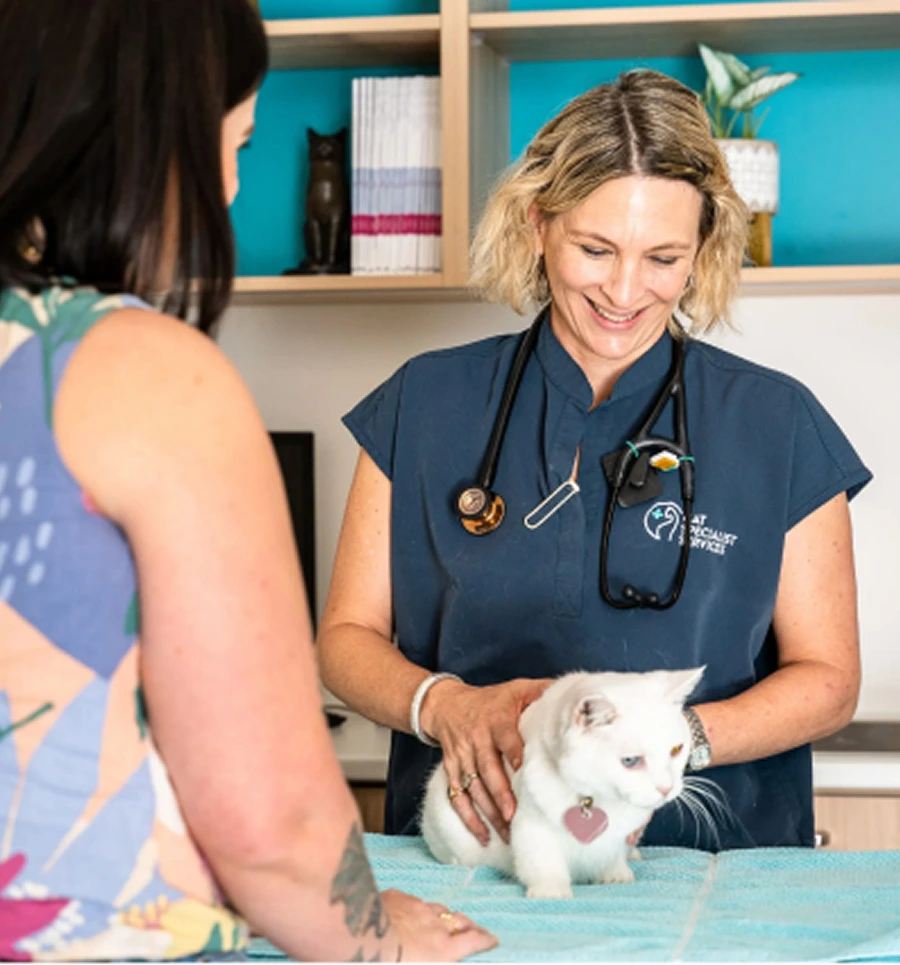
Meet The Author
Dr Rachel Korman
Specialist in Feline Internal Medicine
BVSc MANZCVS (Internal Medicine) FANZCVS (Feline Medicine)
Dr. Korman’s childhood love for cats led her to veterinary medicine, and early on, it was clear that feline care was her calling. After graduating from the University of Queensland in 2000, she worked in small animal and feline-only practices across Australia and the UK.
She received a Senior Clinical Training Scholarship from the Feline Advisory Bureau (now International Cat Care) at the University of Bristol, where she researched feline infectious and haematological diseases, and in 2018, became a Fellow of the Feline Medicine Chapter of the Australian New Zealand College of Veterinary Scientists and a registered Feline Medicine specialist.
Frequently Asked Questions
What is diabetes mellitus in cats?
Diabetes mellitus is a condition where the body cannot regulate blood glucose properly. This often occurs because insulin is not produced in adequate amounts or does not function effectively.
What symptoms might a diabetic cat show?
Cats with diabetes may drink more water, urinate more frequently and lose weight despite having a normal or increased appetite.
How is diabetes diagnosed in cats?
Diagnosis typically involves blood tests and urine tests to evaluate glucose levels. These tests help confirm whether a cat has diabetes.
How is diabetes managed in cats?
Management usually involves insulin injections and regular monitoring of blood glucose levels. Diet and consistent feeding schedules also play an important role.
Can diabetic cats live comfortably with treatment?
With appropriate monitoring and treatment, many diabetic cats can maintain a good quality of life.
Patient Stories
Our commitment to feline health is best seen in the stories of the cats we’ve had the privilege of treating. These journeys highlight the dedication, expertise and compassion that drive us.
Each patient faced unique challenges, and it was our honour to offer high-quality care and help them regain strength and happiness. We value the deep bonds with cats and their owners, knowing the difference we make in their lives.
Kitty, a lymphoma survivor
We first met Kitty after she was referred to CSS for the evaluation of a large intestinal mass
Poppi finds her feet again
Following surgery to remove a hairball obstruction, Poppi was referred to us at CSS as she had not bounced back as expected
Rusty and his ongoing chronic rhinitis journey
Lifelong nasal issues, including persistent discharge and breathing noise, have been a bit of a thorn in Rusty’s side.
Lando’s long game with cryptococcus
Lando was referred to CSS because he had a swelling under his jaw that wouldn’t go away.
Popeye coughs up the culprit
Ares is a handsome young Maine Coon who was referred to CSS after presenting at AES with sudden lameness in his back leg.
Key Takeaways

Diabetes mellitus occurs when a cat’s body cannot properly regulate blood glucose levels.
The condition is linked to problems with insulin production or the body’s response to insulin.
Common signs include increased thirst, increased urination and weight changes.
Cat Specialist Services Reviews  on
on 
Tanya Bell
6 months ago

We transported our cat here from another animal hospital, as his condition was too complex for them. Our pet was given the highest quality of care, multiple investigations/procedures being able to be done at the one place a godsend. We were kept up to date frequently throughout his stay. All questions & options explained thoroughly. Being able to have private visits certainly helped us and our cat too. I would highly recommend Cat Specialist Services at Underwood. Amazing staff from reception, vet nurses, vets & specialists. Oh, and yes he is recovering wonderfully at home.
Melinda Cox
A month ago
So very happy we were asked to come here for advice for our NORBIT. He has had 2 x UTI blockages within weeks of each other since turning 6. Surgery seemed to be his only option and he didn’t feel it was very fair on him if we didn’t at least exhaust all other avenues first.
Dr Allison was very thorough in her tests and has let us know she would like to treat the cause of the problem. Great news.
It may lead to removal of crystals in his bladder if his diet doesn’t let him pass them naturally.
At least this surgery won’t be as severe at taking his penis off him – so as his fur parents – we are very happy with this.
We await further tests to see what’s in store for him.
NORBIT will now be a patient of the clinic as we are so far very happy with his treatment thus far.
Lesley Rosekrans
A month ago
Hi has only been a week since losing my beautiful Peaches but can’t thank Dr Cindy, Maree and Jackie enough for the tender care they gave her and they after care they gave me. I sincerely thank them and can’t recommend the Clinic highly enough they are such caring people. Peaches I’m happier times.
Madison McEwan
A month ago
I cannot thank the entire CSS team enough and especially Dr Cindy for the care they provided for our boy with a urinary blockage, and we will be taking both our cats here from now on. The clinic is exceptionally clean and calming compared to all other clinics we’ve been too, and all staff from the reception to the nurses/vets were so supportive during a stressful time. I knew from the first minute that I got to see him after he was transferred that he was in the best place, and that the staff genuinely care about their well-being and positive long term outcomes. We were given regular updates and full transparency, so much information including QR video codes on how to administer medications, along with print outs and emails about how to best help avoid future issues or recurrence. Our boy got to smooch on everyone and was beyond well looked after. Thank you again, you all made an incredibly stressful situation actually manageable and calming.
Astrid El Gamal
6 months ago
Dr Wan-Ju has been treating my baby since her first seizure in November 2025 and she has been fantastic.
Everybody at the clinic is so friendly and caring and I know my baby is in good hands.
Thank you team!
Deeba M
3 months ago
Dr Alison Jukes from CSS Underwood is an AMAZING feline physician. She is kind, professional, thorough and our cat is blessed to have her on his side. She even was able to save us money and invasiveness by being skilled to the level of doing ultrasound on two separate occasions without our cat needing to go under full sedation. Our other cat was recently seen by Dr Jukes as well, and she made sure our cat’s heart was ok. I also want to thank the lovely Jacqueline and Mairead from customer care. They are very kind each time I see them and call up. Sending thanks from our family, including Smokey and Floozy!
Judith Dionysius
A month ago
My whole experience with CSS was positive – from the first email I received giving lots of information regarding the process of radioactive iodine treatment to the expected costs, to checking my cat in for the treatment, boarding for 2 weeks after the treatment and picking her up to come home. They didn’t push for any tests that were not necessary.
Janelle Wieden
5 months ago
We never knew this service existed but we are very grateful we were referred to them. Our vet Cindy was really great, she made us feel at ease during a very stressful time. We got the sense straight away the Leo was in good hands. This service made us feel better knowing that they specialise is cats only. Would highly recommend their services
Georgia Carter
5 months ago
My Lani finished her I-131 treatment today and I am beyond impressed with the way she was looked after. I am by definition a neurotic pet owner and sending my fur child away for a week was seriously daunting.
I was given daily updates about how kitty was eating, toileting and behaving. This really put my mind at ease. Vets and vet nurses were so accomodating and allowed Lani to have her favourite foods from home prepared her favourite way.
Her vet was so thorough when explaining her treatment and condition to me.
The ladies at reception were so friendly and understanding.
I honestly cannot recommend this clinic enough and I am so thankful for the positive experience Lani and I have had.
Lauren Woodward
A year ago
My sweet ginger boy Louis was hospitalised at CSS for a Urinary Obstruction. Dr Cindy and all the reception staff were amazing and empathetic. I would often ring up with questions post procedure and Dr Cindy would make time to talk and explain things to me
Service Locations
Cat Specialists accepts referrals for cats across Brisbane and surrounding regions, working closely with local veterinary clinics to provide specialist diagnosis, treatment, and ongoing management.



Contacting Us
Pet Owners
If you would like to talk about treatment for your cat, call us on 1300 228 377 or fill in the form.
In an emergency, please contact your local vet.
Vets and Nurses
To refer a patient or book a telehealth consultation please call us on 1300 228 377, book through the portal or fill in the form. For advice calls, please see the guidelines here.


 Monday-Friday: 8 am-6 pm
Saturday/Sunday - Closed