Ultrasounds: A Non-invasive Window into Feline Health

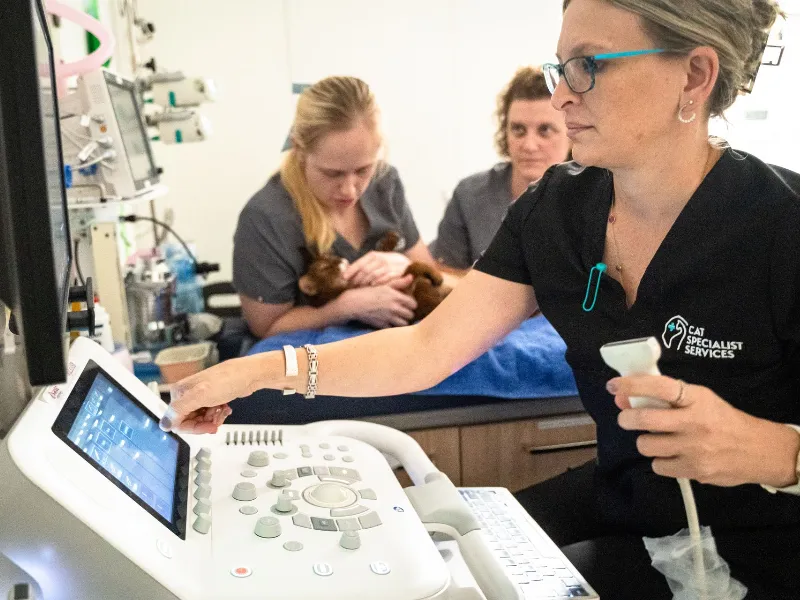
Veterinary team performing an ultrasound on a sedated cat, with multiple monitors and medical equipment surrounding the treatment table

Cats can be as puzzling as the symptoms they develop when illness first appears. Thankfully, modern veterinary medicine gives us the accuracy and tools to examine those changes properly and support better feline health.

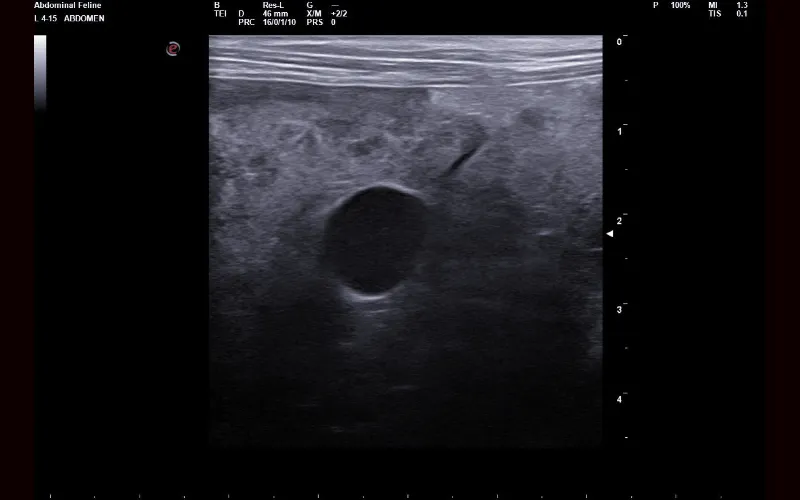
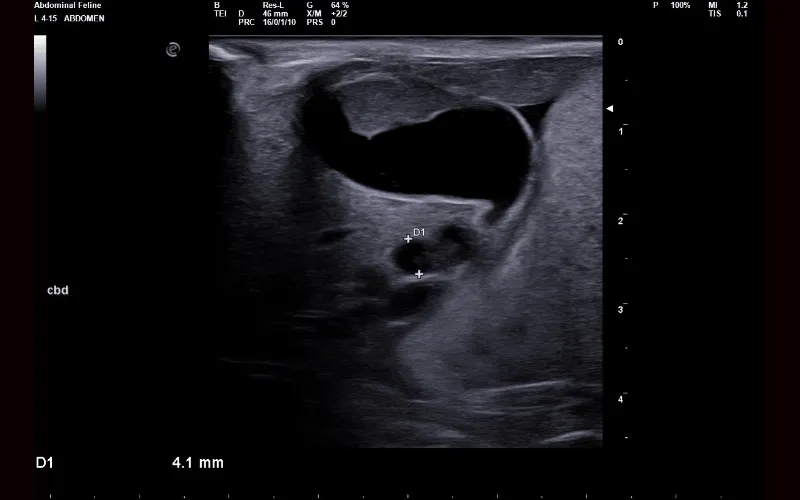
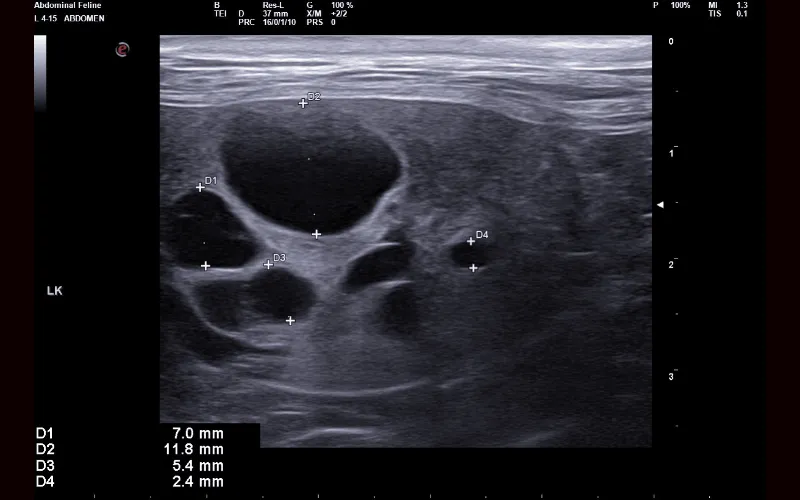
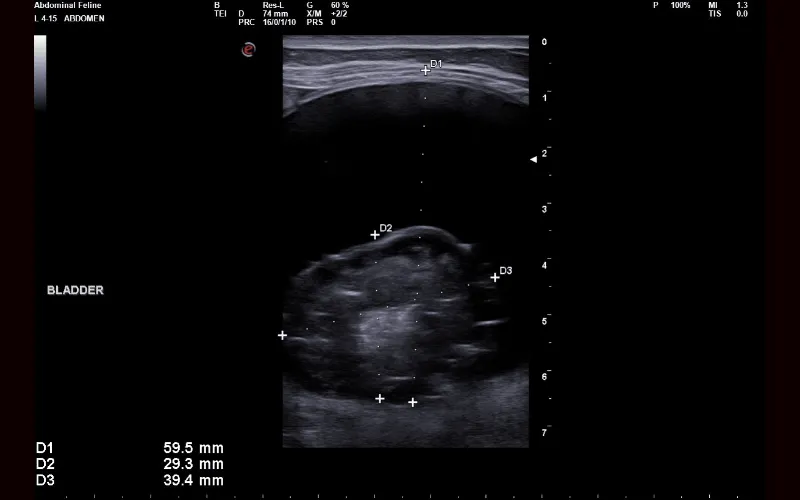
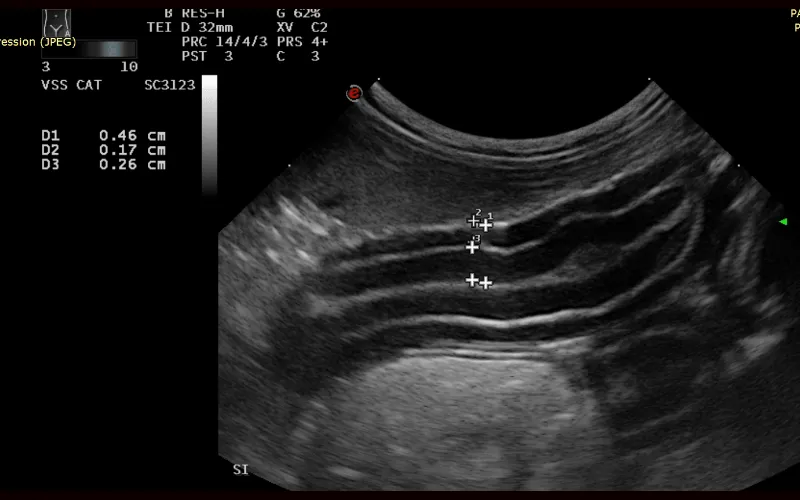
Ultrasound is one of the most valuable technologies we use because it provides a clear, non-invasive view of the organs and structures that need closer assessment. It helps diagnose conditions that aren’t obvious on examination or routine testing.

At Cat Specialist Services, we see a wide range of complex feline cases and use advanced imaging every day to investigate them. Here’s how ultrasound fits into that process.

Taking a closer look, no surgery required

A comprehensive imaging study lets us examine internal structures with a level of nuance that physical examination and routine testing cannot provide. It is often the point where scattered clinical information starts to form a clearer pattern. Subtle variations in texture, contour or internal architecture can explain discrepancies between symptoms and initial findings, and these small details often influence how a case progresses.

Another advantage is the ability to assess how different organs relate to one another. Changes in one area can influence another, and looking at the abdomen as a whole helps us understand how those pieces fit together. Quite frequently, this broader perspective clarifies whether a condition is focal or more widespread and whether further investigation is needed.

This type of structured, step-by-step evaluation provides clinicians with a reliable foundation for informed decision-making. It guides whether targeted sampling is appropriate, whether additional imaging will add value and whether the case would be best managed in general practice or with specialist involvement. It brings together information that directs the next stage of care without resorting to more invasive procedures.

What can we diagnose using ultrasound?

Different diseases and conditions create distinct patterns that become recognisable on ultrasound, even when physical examination or lab work has been inconclusive. Some findings are diagnostic in themselves, while others provide a strong indication of what is developing and the urgency with which it needs to be addressed.

Here is a range of conditions that ultrasound can detect or strongly suggest, grouped by organ systems.

Abdomen

Liver

  • Hepatic lipidosis
  • Inflammatory liver disease
  • Biliary obstruction
  • Portosystemic shunts
  • Liver masses or nodules
  • Changes consistent with fibrosis or chronic disease

Gallbladder and biliary system

  • Cholecystitis
  • Mucocele
  • Sludge accumulation
  • Biliary obstruction or dilation

Spleen

  • Nodules or masses
  • Splenic enlargement
  • Infiltrative disease
  • Infarcts or vascular abnormalities

Kidneys

  • Chronic kidney disease indicators
  • Pyelonephritis
  • Kidney stones
  • Cysts
  • Masses
  • Renal pelvic dilation
  • Congenital abnormalities

Bladder and urethra

  • Cystitis
  • Bladder stones
  • Masses or polyps
  • Wall thickening
  • Urethral obstruction indicators

Gastrointestinal tract

  • Thickening of specific layers (suggesting inflammation, IBD or neoplasia)
  • Obstruction
  • Intussusception
  • Foreign material
  • Lymph node enlargement
  • Intestinal masses

Pancreas

  • Pancreatitis indicators
  • Pancreatic enlargement
  • Masses or cysts
  • Peripancreatic fat inflammation

Reproductive System

Uterus

  • Pyometra
  • Pregnancy assessment
  • Uterine masses
  • Fluid accumulation

Ovaries and testes

  • Masses or enlargement
  • Cysts
  • Retained testicles (abdominal)

Thorax (where ultrasound is appropriate)

Pleural space

  • Effusion
  • Masses
  • Consolidation

Heart (when part of a focused assessment)

  • Pericardial effusion
  • Basic chamber assessment before full echocardiography

Lymphatic System

  • Lymph node enlargement
  • Lymphadenopathy patterns that help differentiate inflammation from neoplasia
  • Guidance for fine needle aspirates
Veterinary ultrasound specialist adjusting imaging settings while another team cares for a small sedated cat in the background

Why specialist interpretation helps

We see complex feline cases every day, and are familiar with patterns and variations that aren’t always obvious. This extensive experience helps us refine the list of likely conditions, identify unusual diseases early and understand which findings genuinely influence the next step in investigation or treatment.

At our cat-only hospital, ultrasound can be combined with fine-needle aspiration, echocardiography, and advanced laboratory testing during the same visit. This enables samples to be taken with precise visual guidance and reduces the need for a patient to return for additional procedures.

It also means imaging and pathology findings can be reviewed together, which gives a more accurate understanding of how the results fit with the cat’s clinical signs.

When ultrasound gives us the answers we need

While most people know what an ultrasound is and does, not everyone realises it is the only practical way to see inside a cat without putting them through surgery. Ultrasound bridges the gap between clinical signs and the physical reality of disease, and that is why it remains such an essential part of feline medicine.

For cats that only need imaging, we can book an ultrasound as a single visit in our outpatient service. Cats are admitted, settled in, examined and imaged in our cat-only hospital, but their care remains with the referring vet. We send the findings promptly for case management without any disruption.

If a sample is needed or if another test will provide useful information, we can arrange for it during the same visit. If the imaging identifies a problem that requires more than an ultrasound alone, the case is referred to the relevant team for immediate assessment and evaluation.

Putting it all in perspective

Ultrasound has been part of veterinary medicine for decades. While early machines offered only basic outlines of abdominal organs, image quality limited how much could be interpreted with confidence. Modern systems provide far greater detail and consistency, which makes the diagnostic process more seamless for clinicians.

At Cat Specialist Services, ultrasound is part of our everyday work with feline patients and continues to shape how we investigate and understand a wide range of conditions in the most non-invasive way possible.

If your cat needs further investigation, contact us. If you’re a veterinarian with a patient requiring specialist care or advanced diagnostics, please complete a referral form. We’re available to discuss complex cases as needed.

Are you worried about your cat’s health?

If you are concerned about your cat, please reach out to our friendly team. Call us on 1300 228 377 or fill out the contact form below. In an emergency, please contact your local vet.

For vets – to refer a patient or book a telehealth consultation, please call us on 1300 228 377, book through the portal or fill in the form.

Patient Stories

Our commitment to feline health is best seen in the stories of the cats we’ve had the privilege of treating. These journeys highlight the dedication, expertise and compassion that drive us.

Each patient faced unique challenges, and it was our honour to offer high-quality care and help them regain strength and happiness. We value the deep bonds with cats and their owners, knowing the difference we make in their lives.

Lando’s long game with cryptococcus

Lando was referred to CSS because he had a swelling under his jaw that wouldn’t go away.

Popeye coughs up the culprit

Ares is a handsome young Maine Coon who was referred to CSS after presenting at AES with sudden lameness in his back leg.

Ares takes a fracture in his stride

Ares is a handsome young Maine Coon who was referred to CSS after presenting at AES with sudden lameness in his back leg.

The road to recovery for Kuro

Kuro is a calm and dignified older cat who faced a challenging case of hyperthyroidism and early kidney changes.

Kikki’s transformation after I-131

Kikki is a gentle and resilient cat who came to CSS with a long-standing case of hyperthyroidism and significant heart changes.

Contacting Us

Pet Owners
If you would like to talk about treatment for your cat, call us on 1300 228 377 or fill in the form.
In an emergency, please contact your local vet.

Vets and Nurses
To refer a patient or book a telehealth consultation please call us on 1300 228 377, book through the portal or fill in the form. For advice calls, please see the guidelines here.

Monday-Friday: 8 am-6 pm
Saturday/Sunday - Closed

    Upload Files .png, .jpg, .jpeg, .pdf, .doc, .docx.